ESG Implemenation Consulting Services

AGP Wins Silver Award at the SAFA Best Presented Annual Report Awards 2024

AGP Wins 1st Position in Pharmaceutical Category at BCSR Awards 2024 — for the Second Consecutive Year!

AGP Celebrates Dual Recognition at the 8th Pakistan Pharma Summit & PESA Awards 2025

AGP Receives the 22nd Annual Environment Excellence Award 2025

AGP Wins GDEIB Awards in Nine Categories

AGP x TrashIt Sustainability Training

AGP x Cyber Security Awareness Training

AGP x Cancer Foundation Hospital: Breast Cancer Awareness Session

AGP Visits Karachi Down Syndrome Program (KDSP)

Diwali Celebration at AGP: Honoring Diversity, Culture & Togetherness

AGP Limited Secures 1st Position at BCSR Awards 2023

AGP collaborates with Childlife Foundation on Children’s Day 2023

AGP Launched Peridots – A Thanda Solution to Acidity, Gas and Indigestion

AGP secures 2nd Position at BCR Awards 2022

AGP wins Top Exporter Award at 6th PPMA Summit

AGP sponsors KDSP Carnival 2023

AGP bags big win at GDEIB Awards 2023

AGP continues partnership with IBA

AGP continues collaboration with TCF

AGP joins hands with SKMF

AGP continues partnership with ACF

AGP conducts Allergy Awareness Session At Pak Turk Maarif

Gong-Ringing Ceremony of AGP at PSX

Rubiject Injection

Generic:

Iron sucrose


Therapeutic Class:

Iron Plain


Composition:

Each 5 ml of Rubiject ampoule
contains:
Iron sucrose equivalent to elemental iron … 100 mg


Description:

Rubiject (iron sucrose
injection) is an aqueous complex of polynuclear iron (III)-hydroxide in
sucrose for intravenous use.


Indications:

Rubiject is recommended in:

  • Conditions in which there
    is clinical requirement for rapid iron supply
  • Active inflammatory bowel
    disease where oral iron preparations are ineffective
  • Iron deficiency due to
    other reasons like final stages of pregnancy, non-responsiveness or
    non-compliance to oral iron therapy, malabsorption, before and after
    surgery etc.

Rubiject is also indicated in
the treatment of iron deficiency anaemia in chronic kidney disease patients
who are:

  • Non-dialysis dependent
    patients receiving or not receiving an erythropoietin
  • Peritoneal dialysis
    dependent / hemodialysis dependent patients who are receiving an
    erythropoietin
 

Dosage:

Adults:
Rubiject injection 5-10 ml (100-200 mg iron) 1-3 times / week depending on
the haemoglobin level.
Rubiject injection should be administered intravenously by slow injection
or infusion.

Children:
Under study conditions, there is limited data available. If there is
clinical requirement, Rubiject is recommended not to exceed 0.15 ml (3 mg
iron)/kg body weight 1-3 times/week depending on the haemoglobin level
also.

Recommended Adult Dosage(Chronic kidney disease patients):

Hemodialysis Dependent:
Undiluted Rubiject can be administered as 100 mg slow IV injection in 2-5
minutes or as an infusion of 100 mg, diluted in a maximum of 100 ml of 0.9%
NaCl in atleast 15 minutes per consecutive hemodialysis session for a total
dose of 1000 mg.

Non-Dialysis Dependent:
Rubiject is administered as a total dose of 1000 mg in 14 days as 200 mg
slow IV injection undiluted in 2-5 minutes on 5 different occasions within
14 days.

Peritoneal Dialysis Dependent:
Rubiject administered as a total dose of 1000 mg in 3 divided doses, given by slow IV infusion, within 28 days: 2 infusions of 300 mg in 1½ hours 14 days apart followed by one 400 mg infusion in 2½ hours 14 days later. The Rubiject dose should be diluted in a maximum of 250 ml of 0.9% NaCl. .


Presentations:

  • Inj 5′s


Rigix

Generic:

Cetirizine Dihydrochloride


Therapeutic Class:

Antihistamines Systemic


Composition:

Each Rigix tablet contains cetirizine dihydrochloride 10 mg.
Each ml of Rigix oral solution contains 1 mg of cetirizine dihydrochloride
 

Description:

Cetirizine, an active metabolite
of hydroxyzine, is an antihistamine; its principal effects are mediated via
selective inhibition of peripheral H1 receptors and are indicated in
allergic conditions


Indications:

  • Seasonal allergic rhinitis
  • Perennial allergic rhinitis
  • Chronic idiopathic urticaria
 

Dosage:

Tablets:
Adults & children above 12 years: One 10 mg tablet dailyRigix oral solution can be taken without regard to food consumption.

Children 6 months to <2 years for Perennial Allergic Rhinitis and Chronic Urticaria:

The recommended dose of Rigix oral solution in children 6 months to 23 months of age is 2.5 mg (½ teaspoonful) once daily. The dose in children 12 to 23 months of age can be increased to a maximum dose of 5 mg per day, given as ½ teaspoonful (2.5 mg) every 12 hours.

Children 2 to 5 years for Chronic Urticaria:

The recommended initial dose of Rigix oral solution in children aged 2 to 5 years is 2.5 mg (½ teaspoonful) once daily. The dosage in this age group can be increased to a maximum dose of 5 mg per day given as 1 teaspoonful (5 mg) once daily, or as ½ teaspoonful (2.5 mg) given every 12 hours.

Children 6 years & above:

2 teaspoonfuls once daily or 1 teaspoonful twice daily.


Presentations:

  • 10 mg tabs 30’s,
  • Oral sol 120ml,

Protege

Generic:

Lactobacillus acidophilus,
Lactobacillus rhamnosus, Bifidobacterium lactis, Bifidobacterium bifidum,
Galactooligosaccharide


Therapeutic Class:

Antidiarrheal Microorganisms


Composition:


Each 2 g Sachet of Protégé is a blend of 4 different strains with 10 billion COLONY FORMING UNITS of human gut flora like friendly bacteria include:

  • Lactobacillus acidophilus 
  • Lactobacillus rhamnosus
  • Bifidobacterium lactis
  • Bifidobacterium bifidum
  • A PREBIOTIC Galactooligosaccharide (GOS) 
  • Lactobacillus acidophilus

Description:


Protégé is Probiotic preparation. Probiotics are live microorganisms which when administered in adequate amounts, they confer a health benefit on the host. Popular probiotic strains include the Lactobacillus spp., Bifidobacterium spp. and coccus spp.


Indications:

  • Acute & Chronic Infectious Diarrhea
  • Traveler’s Diarrhea
  • Antibiotic associated Diarrhea
  • Inflammatory Bowel Disease (IBS)
  • Lactose Intolerance
 

Dosage:


Children & Adult: Take 1
‐2
sachets per time, dissolving into water with temperature not more than 40
℃.


Presentations:

  • 2 g Sachet 10’s,


Pozemet

Generic:

Metformin HCl, Pioglitazone HCl 


Therapeutic Class:

Glitazone& Biguanide Combinations


Composition:

Pozemet Tab 15 mg/500 mg:

Each tablet contains 15 mg pioglitazone hydrochloride with 500
mg metformin hydrochloride.

Pozemet Tab 15 mg/850 mg:

Each tablet contains 15 mg pioglitazone hydrochloride with 850
mg metformin hydrochloride.


Description:

Pozemet tablet contains
two oral antihyperglycemic drugs, pioglitazone hydrochloride and metformin
hydrochloride. They are used in the management of type 2 diabetes.

Pioglitazone
hydrochloride acts primarily by decreasing insulin resistance. It improves
sensitivity to insulin in muscle and adipose tissue and inhibits hepatic
gluconeogenesis. It reduces circulating insulin levels and improves
glycemic control.

Metformin hydrochloride
improves glucose tolerance by lowering both basal and postprandial plasma
glucose. It improves insulin sensitivity by increasing peripheral glucose
uptake and utilization. It also decreases hepatic glucose production and
intestinal absorption of glucose.


Indications:

Pozemet is indicated as an adjunct to diet and exercise to
improve glycemic control in type 2 diabetic patients who are already
treated with a combination of pioglitazone and metformin or whose diabetes
is not adequately controlled with metformin alone or for those patients who
have initially responded to pioglitazone alone and require additional
glycemic control.


Dosage:


Starting dose of Pozemet should be based on the patient’
s current treatment
of pioglitazone and/or metformin. Pozemet should be given with meals in
divided daily doses to reduce the gastrointestinal side effects associated
with metformin.

Starting Dose:


For patients inadequately controlled on metformin monotherapy:

Pozemet  may be
initiated at either 15 mg/500 mg or 15 mg/850 mg tablet strength based on
usual starting dose of pioglitazone (15-30 mg daily), once or twice daily
and gradually titrated after assessing adequacy of therapeutic response.

For patients who initially responded to pioglitazone monotherapy & require additional glycemic control:

Pozemet may be
initiated at either 15 mg/500 mg twice daily or 15 mg/850 mg tablet
strength once daily based on the usual starting doses of metformin (500 mg
twice daily or 850 mg daily) and gradually titrated after assessing
adequacy of therapeutic response.

For patients switching from combination therapy of pioglitazone plus metformin as separate tablets:

Pozemet may be
initiated with either 15 mg/500 mg or 15 mg/850 mg tablet strengths based
on the dose of pioglitazone and metformin already being taken.

Maximum Recommended Dose:

The maximum recommended dose for pioglitazone is 45 mg & metformin is 2,550 mg daily in adults.


Presentations:

  • Pozemet 15 mg/500 mg is available in 14’s
  • Pozemet 15 mg/850 mg is available in 14’s


Poze

Generic:

Pioglitazone HCl


Therapeutic Class:

GLITAZONE A-DIABS PLAIN


Composition:

Poze tablet 15 mg:
Each Poze tablet contains pioglitazone hydrochloride equivalent to can also be used in combina pioglitazone … 15 mg


Poze tablet 30 mg:
Each Poze tablet contains pioglitazone hydrochloride equivalent to pioglitazone … 30 mg


Poze tablet 45 mg:
Each Poze tablet contains pioglitazone hydrochloride equivalent to pioglitazone … 45 mg


Description:

Poze (pioglitazone
hydrochloride) is an oral antidiabetic agent that is used in the management
of type 2 diabetes. It acts primarily by decreasing insulin resistance. It
improves sensitivity to insulin in muscle and adipose tissue and inhibits
hepatic gluconeogenesis. It reduces circulating insulin levels and improves
glycemic control.


Indications:

Poze is indicated for type 2 diabetes mellitus (non-insulin dependant diabetes mellitus) as an adjunct to diet control and exercise.

Poze is recommended for monotherapy. It can also be used in combination with sulfonylureas, metformin or insulin when diet and exercise plus the single antidiabetic agent do not result in glycemic control.


Dosage:

Poze tablets can be taken once daily with or without meals. Skipping meals, while taking Poze is not advisable since this can lead to hypoglycemia.


Monotherapy:
Poze monotherapy is initiated at 15 mg or 30 mg once daily for those patients whose diabetes is not controlled with diet and exercise.
Dose can be increased up to 45 mg once daily for those patients who do not adequately respond to initial dose of Poze.


Combination therapy:
Combined therapy should be considered for those patients who do not adequately respond to monotherapy with Poze.

Sulfonylureas:
Poze can be initiated with sulfonylureas at 15 mg to 30 mg once daily. If the patient experiences hypoglycemia, dose of sulfonylureas should be adjusted (decreased).


Metformin:
Poze can be initiated with metformin at 15 mg to 30 mg once daily. The therapeutic effects of Poze are seen in combination with metformin in patients regardless of dose (low or high) of metformin which the patients are receiving.


Insulin:
Poze can be initiated with insulin at 15 mg to 30 mg once daily. While giving Poze in combination with insulin, dose of insulin can be decreased by 10% to 25% if the patient is hypoglycemic or if plasma glucose concentrations decrease to less than 100 mg/dl. Further adjustments should be done based on glucose-lowering response. If there is a particular risk of hypoglycemia, patients on insulin should be given 15 mg of Poze once daily initially.


Maximum recommended dose:
The maximum dose of Poze should not exceed 45 mg once daily.


Presentations:

  • Poze 15 mg is available in 14’s
  • Poze 30 mg is available in 14’s
  • Poze 45 mg is available in 14’s


Poze G

Generic:

Glimepiride, Pioglitazone HCI


Therapeutic Class:

Glitazone & S-Urea Combs


Composition:

Poze G Tab 30 mg/ 2 mg: 
Each tablet contains 30 mg pioglitazone hydrochloride with 2 mg
glimepiride.

Poze G Tab 30 mg/ 4 mg: 
Each tablet contains 30 mg pioglitazone hydrochloride with 4 mg
glimepiride.


Description:

Poze G tablets contain two oral antihyperglycemic agents used in the management of type 2 diabetes: pioglitazone hydrochloride and glimepiride. Pioglitazone hydrochloride acts primarily by decreasing insulin resistance. It improves sensitivity to insulin in muscle and adipose tissue and inhibits hepatic gluconeogenesis. It reduces circulating insulin levels and improves glycemic control. Glimepiride is an oral
glucose-lowering drug of the sulphonylurea class, which acts by increasing
the release of insulin from the pancreatic beta cells.


Indications:

Poze G is indicated as an
adjunct to diet and exercise as a once-daily combination therapy to improve
glycemic control in patients with type 2 diabetes who are already treated
with a combination of pioglitazone and a sulfonylurea or whose diabetes is
not adequately controlled with a sulfonylurea alone, or for those patients
who have initially responded to pioglitazone alone and require additional
glycemic control.


Dosage:

Poze G tablets are available as a 30 mg pioglitazone plus 2 mg glimepiride or a 30 mg pioglitazone plus 4 mg glimepiride formulation for oral administration. The maximum recommended daily dose for pioglitazone is 45 mg and the maximum recommended daily dose for glimepiride is 8 mg. Poze G should therefore not be given more than once daily at any of the tablet strengths.   


General:

The use of antihyperglycemic therapy in the management of type 2 diabetes should be individualized on the basis of effectiveness and tolerability.

Dosage Recommendations:

Selecting the starting dose of Poze G should be based on the patient’s current regimen of pioglitazone and/or sulfonylurea. It is recommended that a single dose of Poze G be administered once daily with the first main meal.

Starting dose for patients currently on glimepiride monotherapy:

Based on the usual starting dose of pioglitazone (15 mg or 30 mg daily), Poze G may be initiated at 30 mg/2 mg or 30 mg/4 mg tablet strengths once daily, and adjusted after assessing adequacy of therapeutic response.

Starting dose for patients currently on pioglitazone monotherapy:

Based on the usual starting doses of glimepiride (1 mg or 2 mg once daily), and pioglitazone 15 mg or 30 mg, Poze G may be initiated at 30 mg/2 mg once daily, and adjusted after assessing adequacy of therapeutic response.

Starting dose for patients switching from combination therapy of pioglitazone plus glimepiride as separate tablets:

Poze G may be initiated with 30 mg/2 mg or 30 mg/4 mg tablet strengths based on the dose of pioglitazone and glimepiride already being taken. Patients who are not controlled with 15 mg of pioglitazone in combination with glimepiride should be carefully monitored when switched to Poze G.

Maximum Recommended Dose:

Poze G tablets are available as a 30 mg pioglitazone plus 2 mg glimepiride or a 30 mg pioglitazone plus 4 mg glimepiride formulation for oral administration. The maximum recommended daily dose for pioglitazone is 45 mg and the maximum recommended daily dose for glimepiride is 8 mg. Poze G should therefore not be given more than once daily at any of the tablet strengths. 


Presentations:

  • Poze G 30 mg/ 2 mg is available in 14’s
  • Poze G 30 mg/ 4 mg is available in 14’s


Posterisan

Generic:

Bacterial Culture Suspension


Therapeutic Class:

Topical Antihaemorrhoidal


Composition:

Bacterial cultural suspension


Description:

1 gm of Posterisan forte
ointment contains in 166.7 mg aqueous suspension 330 million dead E.coli
(corpuscular components and metabolites) and 3.3 mg liquefied phenol
(corresponding to 3.0 mg pure phenol) in an inert ointment base (water/oil
emulsion)


Indications:

For the treatment of
haemorrhoids, eczema and itching in the region of the anus (anal eczema and
pruritus anal), anal fissures and cracks (rhagades).


Dosage:

Ointment is applied several
times daily in a thin layer on the parts of skin or of the mucosa that must
be treated


Presentations:

10 gm ointment


Posterisan Forte

Generic:

Bacterial Culture Suspension,
Hydrocortisone


Therapeutic Class:


Topical Antihaemorrhoidal


Composition:


Bacterial cultural suspension
and hydrocortisone


Description:


1 gm of Posterisan forte
ointment in 166.7 mg aqueous suspension contains 500 million dead E.coli
(corpuscular components and metabolites), 3.3 mg liquefied phenol
(corresponding to 3.0 mg pure phenol) and 2.5 mg hydrocortisone in an inert
ointment base (water/oil emulsion)


Indications:


Persistent haemorrhoids
complaints, acute or ulcerous eczemas, itching and painful cracks and chaps
(rhagades and fissures) in the anal region


Dosage:


Ointment is applied several
times daily in a thin layer on the parts of skin or of the mucosa that must
be treated


Presentations:


10 gm ointment


Phyllocontin

Generic:

Aminophylline Hydrate

Therapeutic Class:

Xanthines – Systemic

Composition:

Each Phyllocontin continus
tablet contains aminophylline hydrate 225 mg.

Description:

Phyllocontin continus tablet
contains aminophylline that is the salt of theophylline most commonly used
for therapeutic purposes. It acts as a bronchodilator (dilates the bronchi
i.e. air passage). It improves breathing by opening air passages in the
lungs.

Indications:

  • Treatment and prophylaxis of bronchospasm associated with asthma. emphysema & chronic bronchitis
  • Prevention of
    exercise-induced bronchoconstriction

Dosage:

1-2 tablets 12 hourly ensure 24
hours protection

Presentations:

225 mg tabs 50’s

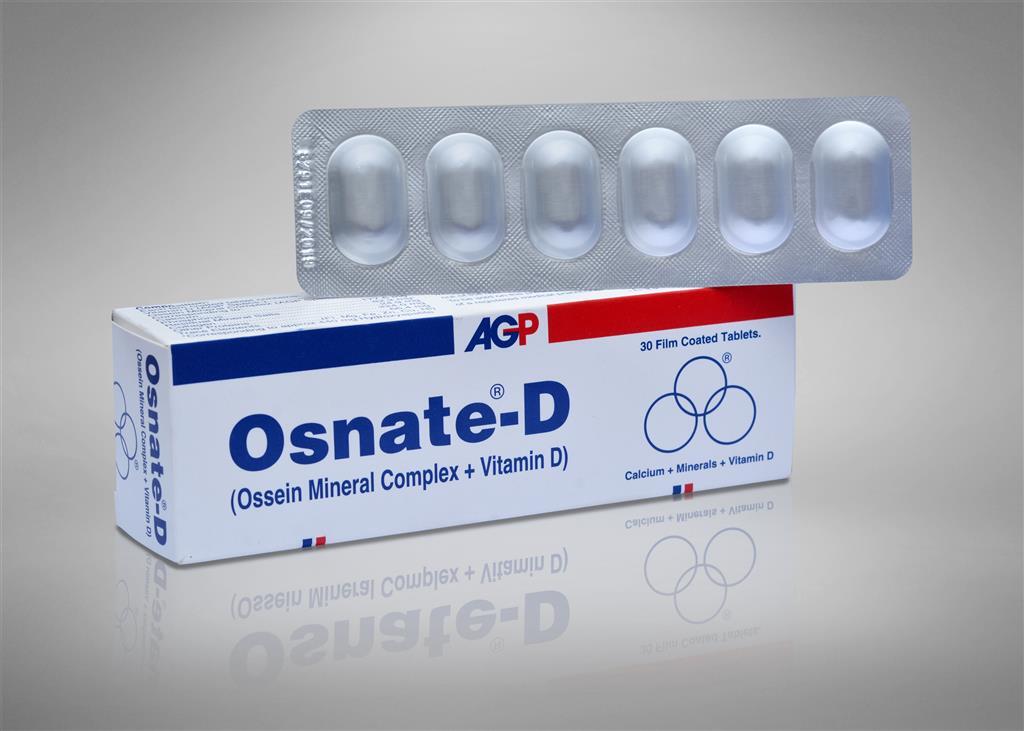
Osnate-D Tablets

Generic:

Ossein Mineral Complex


Therapeutic Class:


Calcium


Composition:

 
Each Osnate-D tablet contains:

  • Vitamin D……………………… 400 IU
  • Ossein Mineral Complex …….. 830 mg
  • Corresponding to:
  • Calcium …………………….. 177.6 mg*
  • Phosphorus ………………… 82.2 mg*
  • Residual Mineral Salts …… 24.9 mg
  • Collagen ……………………. 224  mg
  • Other proteins …………….. 66.4 mg
  • Trace elements ……………. Fl, Mg, Fe, Zn, Cu, Ni.

* Corresponding to approximately 440 mg Hydroxyapatite.


Description:

 
Osnate-D contains the organic matrix (Ossein) and the mineral components (Hydroxyapatite) of bone tissue in physiological proportions along with Vitamin D.  
 

Indications:

 
Osnate-D is indicated in the following conditions:

  • Increased mineral requirements during pregnancy, lactation and growth
  • Osteoporosis
  • Osteomalacia
  • Hypocalcemia
  • Bone pain
  • Increased bone fragility
  • Prophylaxis against dental caries
  • As adjuvant in fractures with delayed callus formation 


Dosage:

 
Usual dosage: 1-2 tabs daily before meals with some liquid.

Special dosage instruction:  In Osteoporosis: As advised by the physician.


Presentations:

 
Osnate-D Tabs are available in pack of 30’s.